
little bluets native plants

Creating Habitat for Birds
_JPG.jpg)
Buds and Blooms Spring Market
Sunday April 19th 12 - 4pm
Location: Haven Farm
8521 Buffaloe Rd, Knightdale NC
Thursday April 23rd 5:30-7:30pm
Location: Zin Yoga and Wine
104 Rand Mill Rd
Garner, NC 27529
*Wine Tasting. Food Truck
Saturdays Mornings 8am - 12pm
May 2nd
May 9th
May 16th
May 23rd
May 30th
June 6th
I'll be back selling plants at the
and other events in March 2026!
I will keep my plant availability page current through the winter. If I have something you are looking for, feel free to contact me!

Brand new to native gardening in North Carolina or gardening in general?
These tips and ideas may help you as you begin your gardening journey.

Getting Started!

Plant
Suggestions

Container Gardens


Getting
Started!
Here are some tips to help you get started including, understanding your garden conditions, working in clay soils, how to plant and mulch.
_JPG.jpg)
Start Small
Begin with small, manageable garden projects that you feel confident you can complete. Although it can be tempting to take on all of your garden ideas, all at one time, it can leave you feeling overwhelmed and discouraged if you are not able to complete what you set out to do. Taking on small projects you are more likely to finish will leave you with a sense of accomplishment and ready to tackle the next project!
Get to Know Your Space!
Understanding how much sunlight your space gets and the amount of moisture in your soil are the first
steps to building the knowledge to successfully choose plants that will thrive in your garden.
_JPG.jpg)
Common Sneezeweeed and Garden Phlox both thrive in full sun and moist soils
Sunlight
Observe how many hours of sunlight your garden receives from late spring through
early fall (when shrubs and flowering perennials have foliage and blooms).
This will allow you to choose plants that will perform best in your particular garden settings.
Full Sun - Deep Shade ... what does each mean?
-
Full Sun: 6 or more hours of sun
-
Part Sun: 4-6 hours of sun
-
Part Shade: 2-4 hours
-
Shade: Less than 2 hours
Some other sunlight terms you may come across ...
-
Deep Shade: no sunlight
-
Dappled Shade: Under a tree where plants get only bits of sunlight coming through the canopy
Soil Moisture
Understanding how long your soil holds moisture can help in choosing plants.
While many plants do well in average moisture soils, some plants perform
best in either dry soils or moist to wet conditions.
Average Soil: Areas that neither hold water or dry out quicky
Dry Soil: Areas that, you guessed it, dry out quickly.
-
Areas on the upper part or the top of a slope
-
Spaces that get sun the entire day in the summer. Sandy soil drains well and therefore may dry out more quickly
Moist Soils: Areas that, yep, dry out sowly
-
Places where water pools and sits after rain. These are often the low points or areas at the bottom of a slope.
-
Areas that may occasionally flood
-
Along a stream or edges of ponds


_JPG.jpg)
_JPG.jpg)

There are many beautiful, full sun grasses and flowernig perennials that would have grown in prairies or meadows
Ferns, sedges, spring wildflowers and ephemerals that naturally grow in decidous woodlands create lovely shade gardens.
Lanceleaf Coreopsis does well in average soils, but is also drought tolerant.
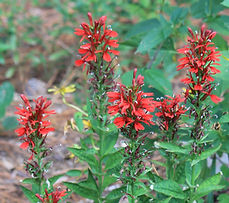
Cardinal Flower thrives in moist or even wet soil.
What to do with Clay Soil?!
Have you ever put a shovel into the ground, only to end up with your entire body reverberating like you struck a rock? Yep, the joys of gardening with clay soils!
Most of us in piedmont North Carolina have heavy clay soil, with little to no topsoil, especially if you are in more developed areas. The good news is that plants native to NC are adapted to clay soils. However, historically a layer of topsoil would have existed above the clay, which is often lost due to development or possibly farming. Therefore, amending the soil with compost can help create better growing conditions for your plants and make working in the soil much easier! Leaving the leaves that fall in your garden in autumn will help build your topsoil over time too!
Adding compost to the clay soil will ...
-
Aerate the compacted clay soil allowing the tender roots of new plants to grow
-
Create better drainage
-
Add nutrients and microorganisms to help foster plant growth
-
Make gardening easier for you and more enjoyable!
Mulching
Mulch will help retain moisture in your soil, help suppress weeds and over time help build your top soil.
What Type of Mulch is Best? … Almost any will do!
-
Leaf mulch (fallen leaves from the previous autumn) is free and works great.
-
Wood chips are also a great option and can be dropped at your house for free (or a tip). CHIP DROP is a way to request wood chips from arborists in your area. It’s super easy, just keep in mind they may drop A VERY LARGE AMOUNT, so unless you need A LOT of mulch it may be great to coordinate with neighbors and share!
-
Buying mulch in bags or from a landscape company also works!
Mulch to Avoid:
-
Dyed mulch (often black, red or dark brown), as this will add chemicals into your gardens
-
Rubber much … for obvious reasons 😉
Don't be afraid to make a mistake!
All gardeners have made mistakes and killed plants. It is one way we gain gardening knowledge.

_JPG.jpg)
_edited.jpg)

_JPG.jpg)


_JPG.jpg)
_JPG.jpg)
_edited.jpg)
_JPG.jpg)

_edited.jpg)